

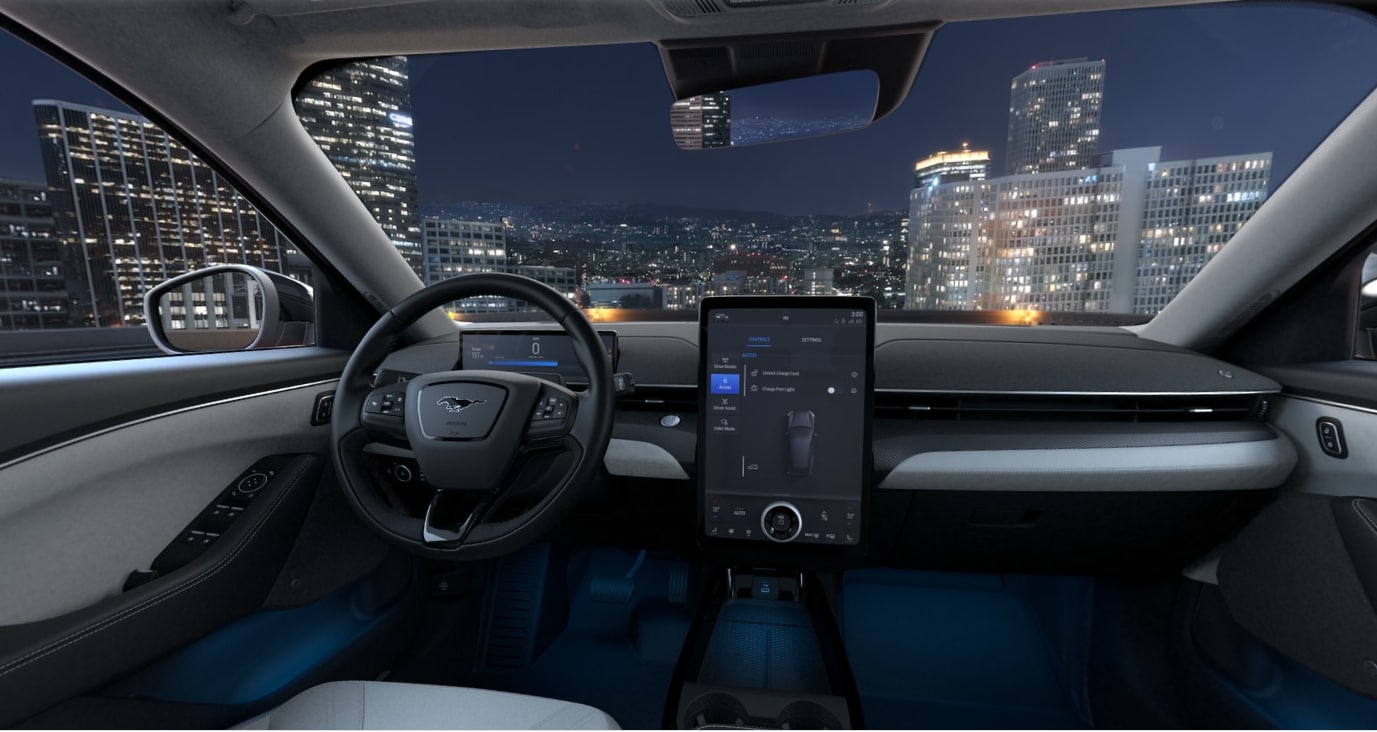
There are many driver-assist features included in today’s Ford models. One of the most popular is Adaptive Cruise Control, also known as ACC. Although some drivers mistakenly think of it as a self-driving option, adaptive cruise control is instead a safety feature.
What is Adaptive Cruise Control?
The adaptive cruise control feature holds a safe distance from the traffic ahead of it. Drivers can set the interval from the steering wheel at how close or far away they want to be from the vehicle in front. This feature will vary in sophistication from one brand — and sometimes one new Ford model — to the next. Depending on the system installed, there is more this feature can do:
- Set the distance: Most systems allow the driver to set the distance between cars.
- Stop the vehicle in traffic: Some ACC systems will bring the car to a complete stop. However, the car won’t self-accelerate.
- Stop and start in traffic: Some systems will bring the vehicle to a complete stop and then automatically accelerate with the traffic flow.
- Slow down at curves: There are ACC systems that are capable of working with your vehicle’s GPS mapping to anticipate turns.
- Adjust to speed-limit variations: A few systems will have traffic sign recognition, or GPS will adjust the speed according to speed limits.
Adaptive cruise control is also known as active cruise control, autonomous cruise control, smart cruise control, and radar cruise control.
How Does Adaptive Cruise Control Work?
ACC monitors other vehicles using radar, laser, binocular computer vision systems, forward-aimed cameras, or a combination of these technologies. This feature gives a safe and comfortable driving experience. It senses when the traffic flow slows or stops, reacting to maintain the preset following distance.
Do you still have questions about adaptive cruise control? Visit or contact Schmit Bros Ford, and one of our dealers will be happy to help.